
Avoiding/Addressing Sewer Backups
There are some simple ways to avoid or address a backup – including installing back-flow valves, using grease-fighting liquid dish soap and not flushing items that clog pipes. Avoid nasty backups during the holiday season by draining and throwing away fats, oils and grease instead of washing them down the drain.
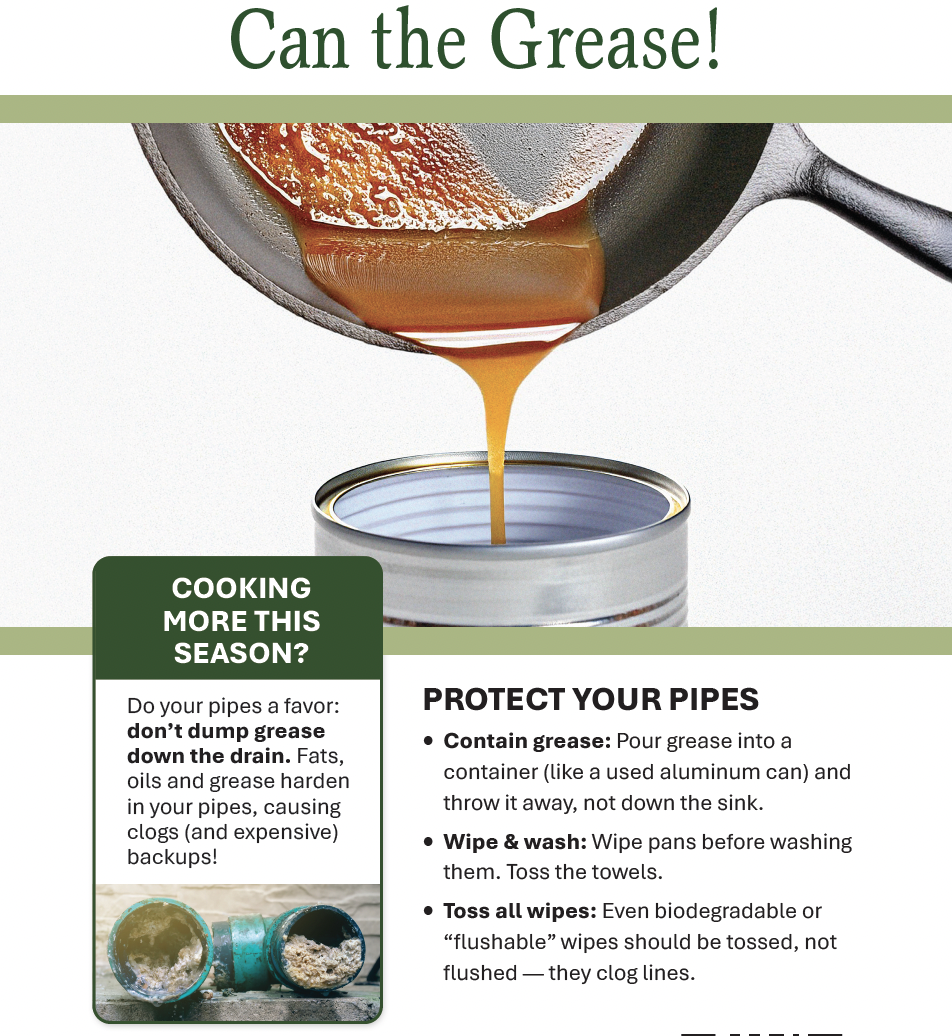
Read our Cover Your Flush handout below for more information:
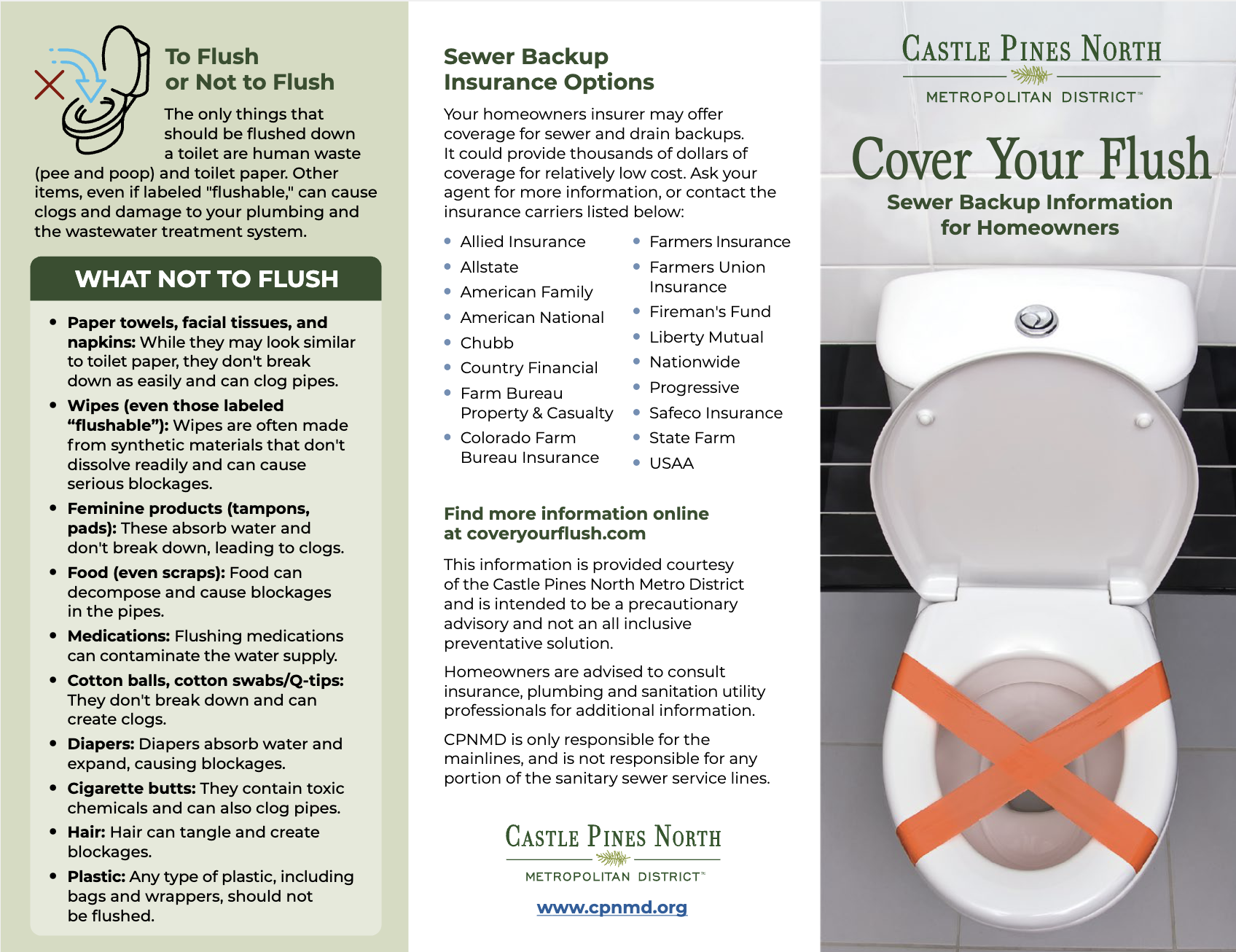
A couple highlights:
Make sure to never flush:
- “Flushable” wipes
- Paper towels, facial tissues and napkins
- Feminine products (tampons or pads)
- Food (even scraps)
- Medications
- Cotton balls, cotton swabs/Q tips
- Diapers
- Cigarette butts
- Hair
- Plastic
What should I do if I have a sewer backup?
- Don't run water down any drains or toilets in your home until the clogs are cleared.
- Check if neighbors are affected. This could indicate a problem in the main line .
- Call a plumber to assist with clearing the issue and closing your drains.
- Call your utility to report the issue. They’ll recommend action and check the main line.
- Call your homeowners' insurance company to determine what coverage may be available.
- Call a contractor to clean and restore your home to a livable condition. Your insurance company should be able to recommend one.
Visit coveryourflush.com for more information.